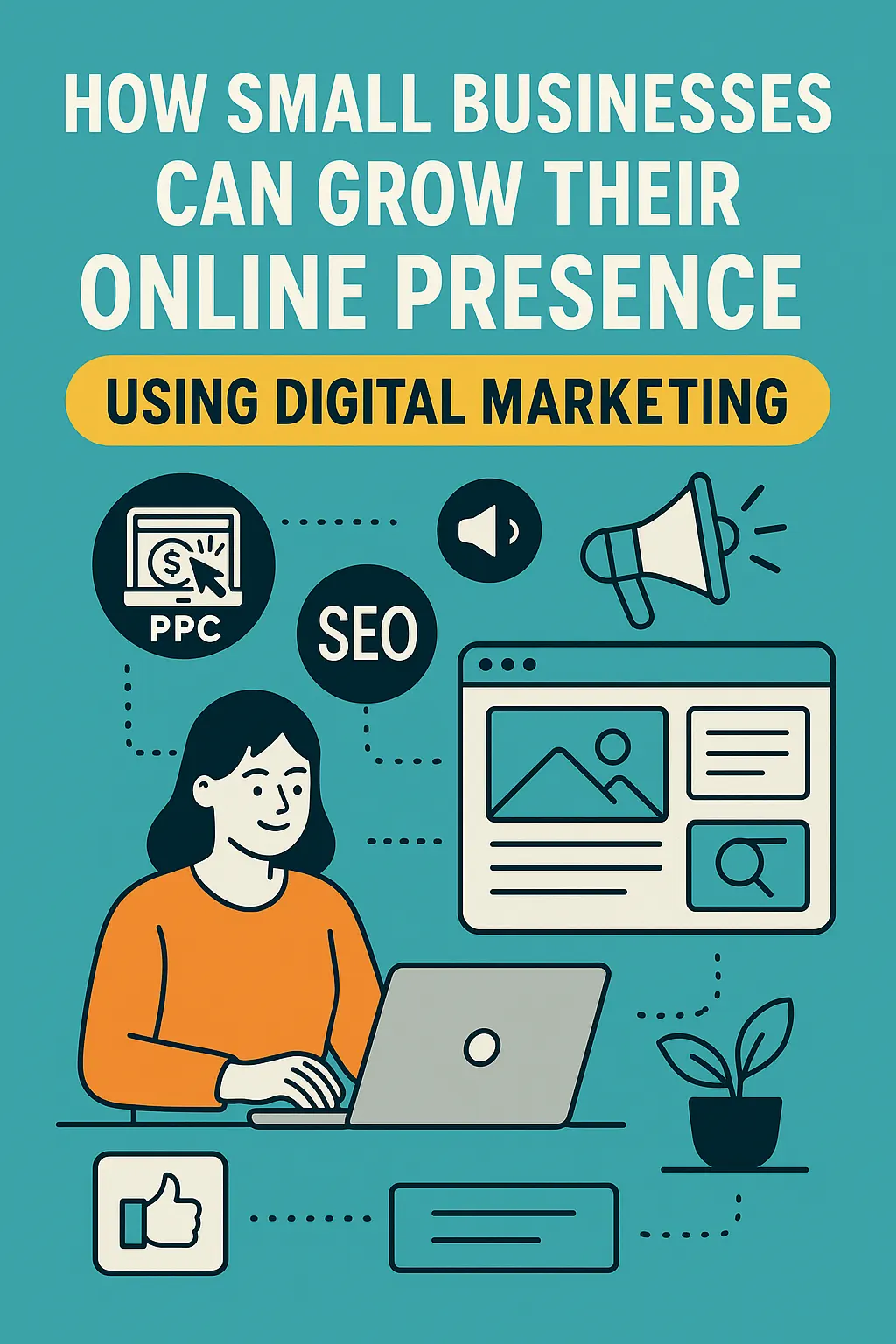
Small businesses can use digital marketing to explain their services, reach relevant audiences and make enquiries easier. This guide covers practical starting points, including website content, local search, social media and measuring results.
Today, having a strong online presence is not just an option—it’s a must. If you’re running a small business and wondering how to grow it without spending lakhs, digital marketing for small businesses is your answer. It helps you reach more people, build trust, and increase sales without opening a second shop. Whether selling clothes, running a bakery, or offering services, digital marketing can change how your business grows.
Tools such as Meta Business Suite, Google Business Profile and Instagram can help businesses manage their online presence. Choose platforms that are available in your target country and suitable for your customers. The good news is that you don’t need to be a tech expert. You need the right strategy and support.
The Current Landscape of Digital Marketing in Small Business
Today, even a small business can grow fast using the internet. Many small business owners now use digital tools like Google Business Profile, Meta Business Suite, and Instagram Sponsored Posts to tell people about their products. You don’t need a big budget to start online marketing for business. From online ads to social media posts, there are many ways to reach customers today. Digital marketing services for small businesses are expanding rapidly, from big cities to small towns, helping more local brands grow online daily.
Key Benefits of Digital Marketing for Small Enterprises
Reach More People
With digital marketing, your message can travel far. You can reach people not just in your city but also in other states or countries. Platforms like Facebook, Instagram, YouTube, and Google help you connect with a wide audience. Even if someone is searching late at night from another part of the world, your content can show up. This means more chances to get new customers without stepping outside your shop.
Cost-Effective
Online advertising on Meta or Google may offer more flexible budgets than traditional media, but the cost and results depend on the audience, platform and campaign. Start with a budget you can afford and measure enquiries before increasing spending. If an ad performs well, you can slowly increase your budget. This makes it perfect for small businesses that don’t want to spend too much at once. You can stop or change an ad anytime—no waste of money.
Easy to Track
You can easily see what’s working with tools like Facebook Ads Manager, Meta Ad Manager, and Google Digital Marketing Reports. Want to know how many people clicked your ad or visited your site? Just check the numbers. This helps you make smart decisions. You can stop things that don’t work and do more of what’s working. It’s like having a scoreboard for your business goals.
Better Connection with Customers:
Social media gives you a chance to talk directly with your customers. You can reply to comments, thank people for their reviews, or even run fun contests to engage them. People like brands that respond. You can also show behind-the-scenes photos, customer stories, or updates about new products. This builds trust and keeps your customers coming back.
Available 24/7:
Your website, Facebook page, or Instagram profile doesn’t sleep. People can learn about your business, send messages, or place orders even when your shop is closed. If you have an online store, people can buy at any hour. This is great for getting orders while you sleep and serving customers in different time zones.
Essential Strategies for Effective Digital Marketing Implementation
Let’s make a small business marketing plan with these strategies:
1. Make a Google Business Profile
Start by creating a Google Business Profile. This helps you put your business on Google Maps, so when someone types “how to put my business on Google Maps” or searches for “grocery store near me” or “beauty shop near me,” your shop will appear.
Also, make sure your profile has:
- Correct phone number
- Store hours
- Photos of your products
- Customer reviews
This makes your business look real and active. It’s one of the best digital marketing techniques for small businesses because it’s free and powerful.
2. Create Social Media Accounts
Open accounts like:
- Facebook Business Page
- Instagram for Business
- Snapchat Business Account
- Pinterest for Small Business
You can easily handle social media using tools like Meta Business Suite and the professional tools available through connected Facebook and Instagram accounts. These help you schedule posts, read messages, and respond to comments in one place.
For in-person networking, a digital business card can help people save your website and social links after a conversation. It supports the broader marketing plan rather than replacing it.
Post every day! Show pictures of your products, share special offers, and post funny or motivational quotes. Social media is your free billboard.
3. Run Paid Ads
Paid ads are easy and don’t cost much. You can show your ad to the exact people you want using:
- Facebook Ads Manager
- Meta Ad Manager
- LinkedIn Campaign Manager
- Instagram Sponsored Posts
- Google Search ads
You choose who sees your ad: their age, location, and even what they like. This is smart digital marketing for small business owners who want quick results.
Example: Run a Facebook Sponsored Ad that shows your grocery shop to people nearby at dinner time!
4. Use SEO and YouTube
SEO (Search Engine Optimization) means using the right words (called keywords) on your website and videos so Google can show your business to people searching online.
For example:
- Use keywords like “digital marketing small business” or “online marketing for business” in your blog.
- Use popular keywords on YouTube and create simple videos about your product or services.
- Try using tags like “seo youtube video” or “What is a digital marketing and SEO”.
If video production is part of your plan, see our guide to choosing video editors in Punjab for advice on captions, footage and deliverables.
Also, post blogs, add images, and use simple website titles. Good SEO helps your business get found for free!
5. Try Affiliate Marketing
Affiliate marketing means someone else promotes your product; when it sells, they get a small cut. You don’t pay unless you earn. This is great for:
- Online stores
- Handmade product sellers
- Clothing or cosmetics shops
You can sign up on digital affiliate marketing platforms or learn from affiliate marketing how-to blogs.
It works well with Pinterest, YouTube, and blogs. Many influencers love promoting small brands.
6. Keep Posting Regularly
Don’t be silent. Share updates every day or every few days. Ideas include:
- Behind the scenes (making a cake, packing an order)
- Customer reviews or happy photos
- New products or upcoming offers
Use Facebook posts, YouTube Shorts and Instagram Stories. These keep people excited and connected.
Also, write short blogs or tips related to your product. This helps with content marketing for small businesses.
If you use AI to plan or draft content, choose the tool carefully and review factual claims. Our Gemini, ChatGPT and Claude comparison explains the differences for marketing and business tasks.
7. Restream and Go Live
With Restream, you can broadcast live on multiple platforms at the same time Like:
- YouTube
Going live is fun! You can show your shop and new arrivals or even talk to your customers in real-time, which increases trust.
For social scheduling, use the publishing tools available in Meta Business Suite or your chosen platform. Live-session features and account eligibility can vary.
Biggest Digital Marketing Struggles for Small Businesses—and How to Fix Them
1. Low Budget
The Problem:
Many small business owners think digital marketing costs a lot of money. They feel they can’t afford expensive ads like big companies.
The Solution:
But guess what? Many useful tools are completely free! You can:
- List your shop on Google Business Profile for free
- Make a Facebook Business Page or Instagram Business Account
- Join groups or forums to promote your work.
Even if you want to spend a little, Meta Ads and Google Ads can be tested with controlled budgets, but platform minimums and results vary. Judge cost-effectiveness by genuine enquiries or sales rather than an assumed minimum spend.
2. Not Tech-Savvy
The Problem:
You may say, “I don’t know how to use these apps,” or “I’m not good with technology.” That’s okay!
The Solution:
Many websites and YouTube videos can teach you step-by-step:
- How to set up an Instagram business account
- How to put my business on Google Maps
- How to use Meta Business Suite for business publishing
Digital marketing support for small business owners is also available. You can ask for help from agencies or freelancers who explain things clearly.
3. Time Management
The Problem:
Running a business takes up most of your time—managing orders, customers, stock, and staff. So, who has time to post daily on Instagram or check ads?
The Solution:
Use free, time-saving apps like:
- Meta Business Suite to plan posts in advance
- Meta Business Suite Inbox to review Facebook messages
- Instagram professional tools to plan reels and stories
These tools can simplify posting and message management, although features vary by platform and account. You can plan posts for the week in just one hour. This is smart social media marketing for small business owners.
4. Reaching the Right People
The Problem:
Even after making posts and ads, many owners say, “No one is buying!” The problem lies in not connecting with the right target audience.
The Solution:
Use tools like:
- Facebook Audience Insights
- Instagram Targeting Settings
- LinkedIn Campaign Manager
Audience and location settings can help focus an ad campaign, but they cannot ensure that every viewer is likely to buy. For local campaigns, our guide to geofencing and location-targeted marketing explains how to check platform limits, prepare landing pages and measure results.
You can also use SEO strategies for small businesses to appear in Google when people search for products like yours.
5. Tracking Results
The Problem:
“What are the signs that my marketing is working?” is a common question. Some business owners post regularly but have no idea if it’s helping.
The Solution:
Start by using:
- Google Analytics
- Meta Ad Manager
- Instagram Insights
These tools show:
- How many people saw your post
- How many clicked your ad
- Which keywords or posts got the most attention
Also, when using SEO marketing for small businesses, track keywords to see which ones bring traffic to your site. It’s like watching your business grow step-by-step.
Measuring Success: Key Performance Indicators for Digital Marketing
How do you know if your marketing is working? Track these:
- Visitors to Your Website
- Number of New Followers or Likes
- Sales or Orders Through Social Media
- Customer Messages and Comments
- SEO Performance
- Engagement Rate on Posts
- Return on Ad Spend (ROAS)
Use tools like Meta Business Manager, Google Analytics, and SEO Cards to see reports. The better your numbers, the better your online marketing strategies are working.
What if digital marketing brings visitors but your website still loses enquiries?
Before increasing an advertising budget, test what visitors can actually do on your website. More traffic will not fix a contact form that cannot deliver messages, a broken checkout, a website that will not load reliably, or an important page that search engines cannot access. These are technical problems to investigate, not reasons to promise that a new marketing campaign will solve everything.
For an initial check of publicly visible SEO, crawlability and security signals, try our free website audit tool. It cannot verify contact-form delivery, completed purchases or the underlying cause of a problem.
Which part of the customer journey is failing?
- Contact: If a form says it sent successfully but the business receives nothing, review WordPress contact-form and email delivery troubleshooting.
- Purchase: If a payment is taken but the order is missing, pending or duplicated, investigate WooCommerce checkout and payment failures before changing order records.
- Page experience: If customers report slow or unstable pages, start with measured website speed and Core Web Vitals problems.
- Search discovery: If important pages are not being indexed, consider technical SEO and indexing diagnosis rather than assuming advertising is the cause.
How to explain a difficult issue: Tell us what failed, where it occurred, when it began, who is affected and what has already been tried. Include the public website URL and a redacted error message if relevant, but never share passwords or sensitive customer records in a first enquiry. If other developers have tried without success, Daljit Singh is interested in assessing the underlying cause through our website repair and remote troubleshooting service. Any remedy, cost or timeline depends on the investigation. Describe the problem and request a discussion.
Conclusion: Embracing Digital Marketing for Sustainable Growth
Digital marketing isn’t just for big companies. Even small shops and services can go big with the right tools and techniques. You don’t need to be an expert. Your business can grow fast with help from a digital marketing agency for small businesses or using platforms like Facebook Business, Instagram, and YouTube.
If you’re asking “how to do marketing for a small business,” the answer is simple: start small, be consistent, and use free tools first. Learn about SEO and online marketing. Focus on what your customers need. Whether using a Snapchat Business Account, promoting through Pinterest, or creating content marketing for small businesses — keep going!
Digital marketing for small businesses is not just a trend — it’s the future. Start now and let your small business shine online!
FAQ’s
Q1: What is digital marketing for small businesses?
“Digital marketing is how you promote your business online using websites, apps, and social media. You can promote your products or services using platforms like Facebook, Google, Instagram, or YouTube. It includes things like posting pictures, running ads, and sharing updates. It helps small businesses reach more customers quickly and easily.
Q2: Can small businesses do digital marketing on a low budget?
Yes, absolutely! Many digital marketing tools like Google Business Profile or Instagram are free. Paid advertising can be tested on appropriate platforms using a budget you can afford; minimum spends and results depend on each platform and market. That’s why digital marketing is a smart choice for small businesses that don’t have a big budget.
Q3: Do I need a website to start digital marketing?
No, you don’t need a website to begin. You can create a free Google Business Profile or a Facebook Business Page. These help people find and contact you online. However, having a website gives you more control and makes your business look more professional.
Q4: What are the best digital marketing strategies for small businesses?
Some top strategies include social media marketing, where you post on Facebook or Instagram, and SEO, which helps people find you on Google. Paid advertising can help reach potential customers on platforms available to your audience, but results are not guaranteed. Don’t forget local tools like Google Maps to help people find your shop easily.
Q5: Is SEO helpful for my small business?
SEO can help search engines discover relevant pages for searches such as “bakery near me” or “best salon in town”, but higher positions, visitors and customers are not guaranteed. Start with accurate service information, useful content and accessible pages. If someone offers to increase your “Domain Authority” as proof of Google ranking improvements, read our guide to Domain Authority and Google rankings to understand what that third-party score does and does not measure.